





Coindoo - 8/12/2026 8:42:45 AM - GMT (+0 )

- 12 August 2026
- |
- 11:41
XRP briefly dropped to $0.99, falling below $1 for the first time since November 2024, before buyers reclaimed the level. The price remains under pressure, but activity across the XRP Ledger is moving in a different direction.
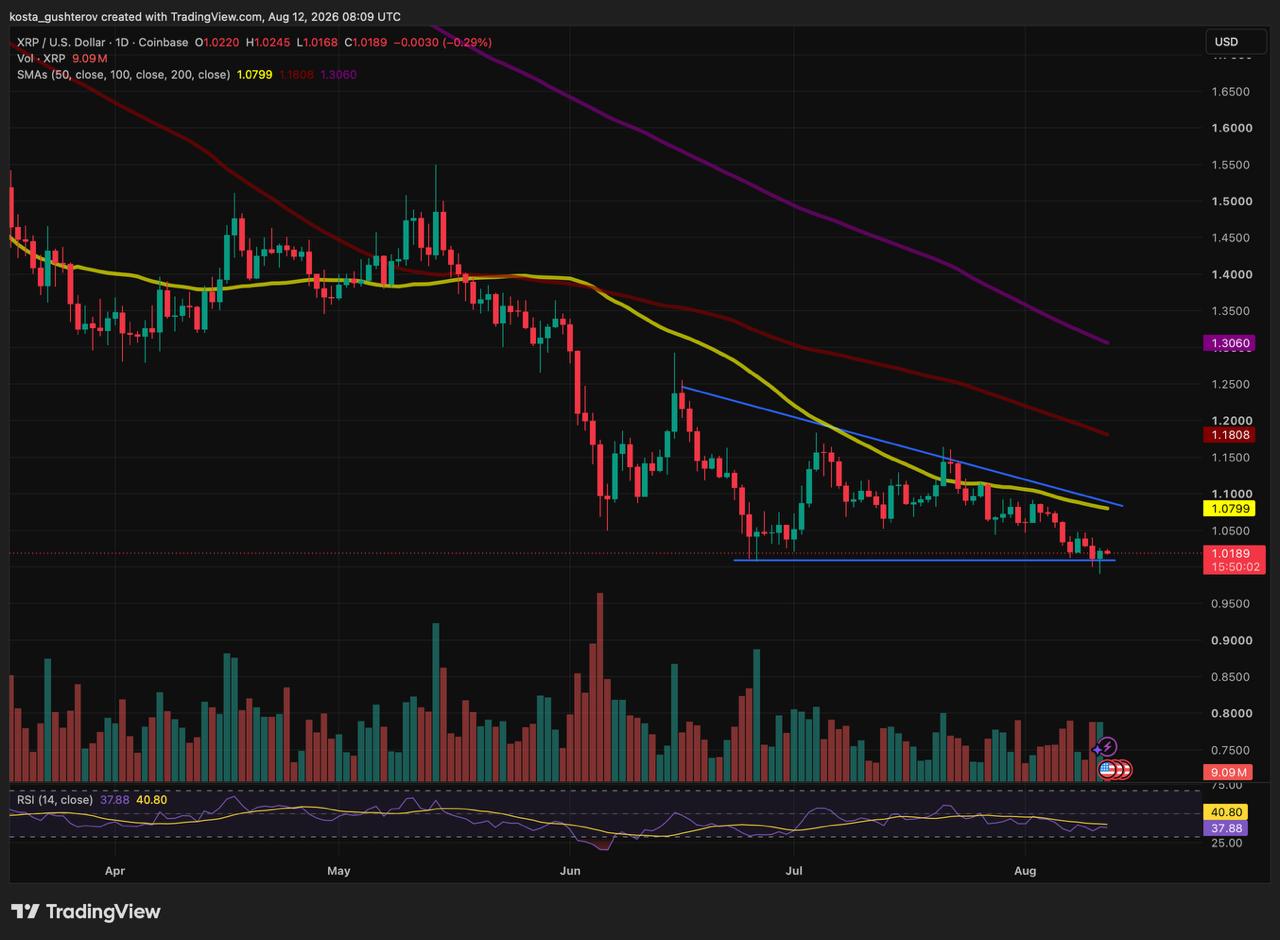
XRP Buyers Hold the Year-Low AreaThe latest selloff pushed XRP into its most important support zone of 2026. Buyers responded around $0.99 and returned the price above the psychological $1 mark, preventing a clean breakdown for now.
XRP testing critical support near $1 on the daily chart.At the time of the chart, XRP was trading around $1.01. The wider structure remains weak: price sits below the 50-day SMA at $1.08, the 100-day SMA at $1.18 and the 200-day SMA at $1.30.
The first level that could materially improve the short-term picture is now just above the market. The falling trendline drawn from the late-June high is approaching the 50-day SMA, creating a resistance area around $1.08-$1.09. A sustained move back above that cluster would break the sequence of lower highs and put XRP back above its nearest major moving average.
That would be an improvement, not a complete trend reversal. The 100-day SMA near $1.18 would remain the next major obstacle if buyers regain control.
Momentum also remains soft. Daily RSI stands at 37, below the neutral 50 level but still above the conventional oversold threshold of 30. In other words, sellers retain the momentum advantage, but XRP is not yet showing an extreme oversold reading.
For now, the price structure comes down to two areas: buyers need to keep $1.00-$1.01 intact, while a recovery through roughly $1.08-$1.09 would provide the first technical evidence that the downtrend is losing strength.
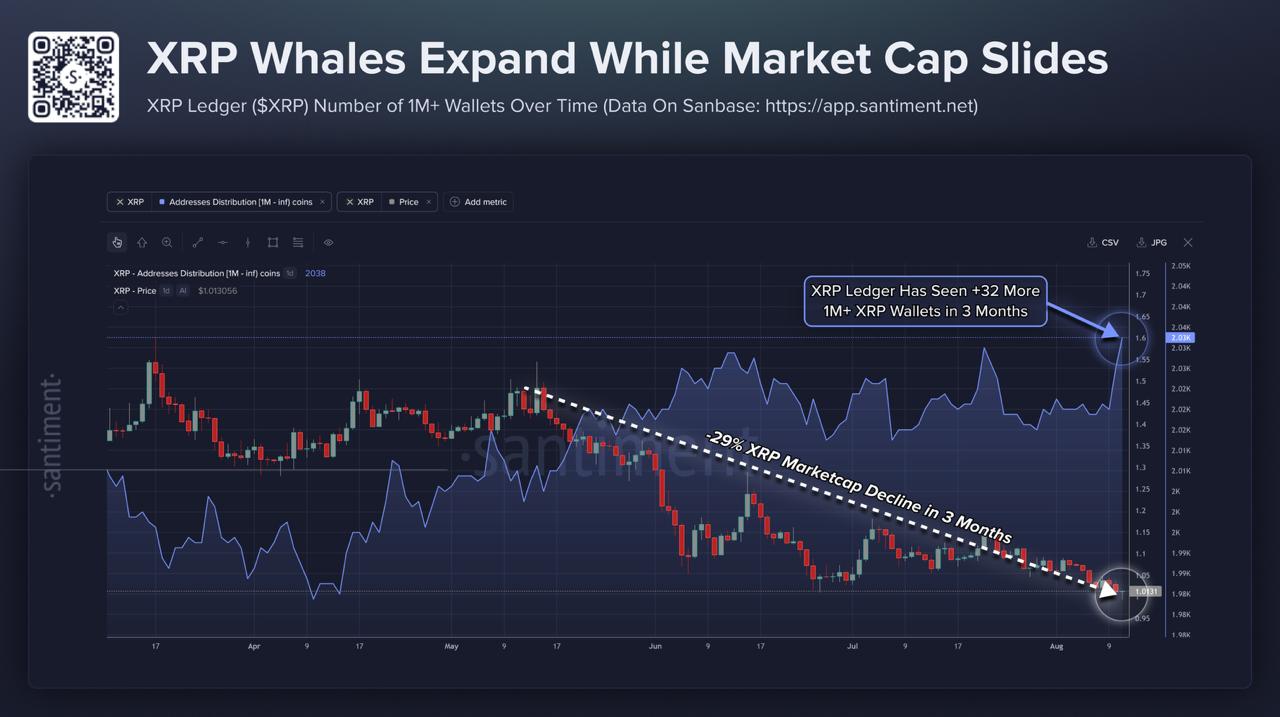
Whale Wallets and Network Activity Move Against the PriceSantiment reports that the number of XRP Ledger wallets holding at least 1 million XRP increased by 32 over the past three months, reaching 2,038. Over the same period, XRP’s market capitalization fell roughly 29%.
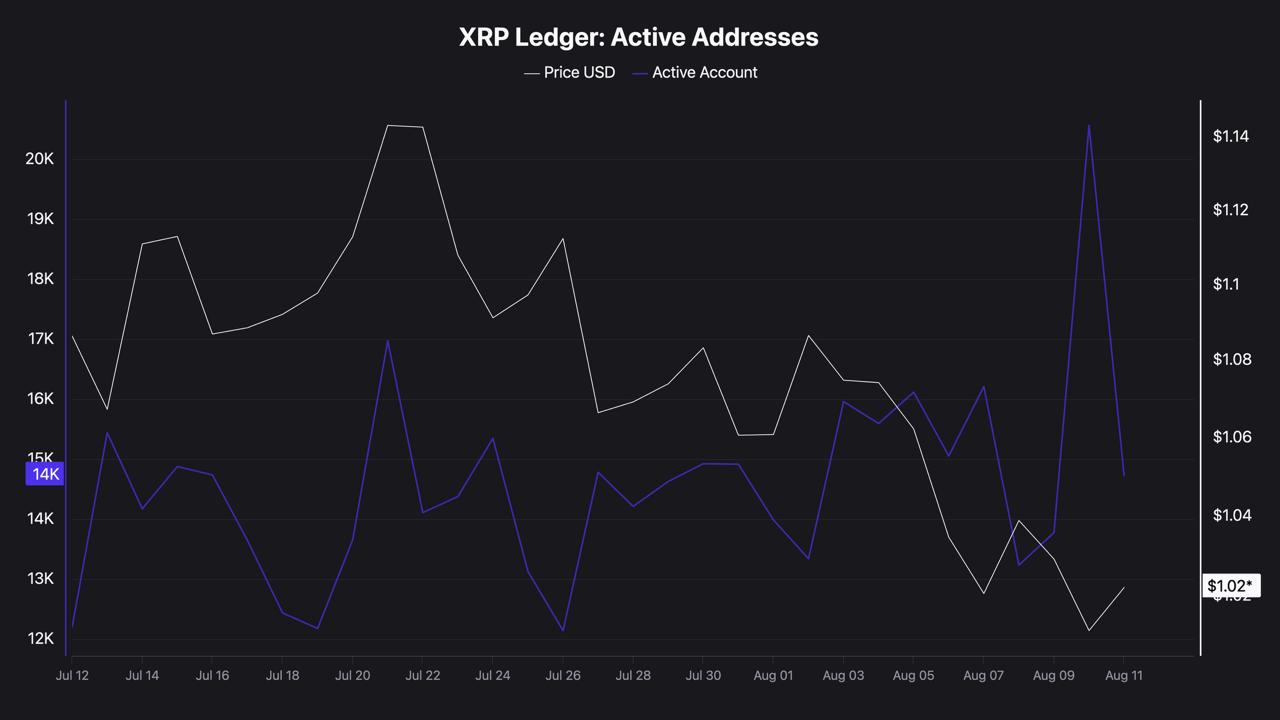
XRP wallets holding at least 1 million tokens increased while market capitalization declined.Network activity strengthened on a shorter timeframe as well. CryptoQuant data shows active addresses rising from 12,195 on July 12 to 20,550 on August 12, an increase of 8,372 addresses, or approximately 68%.
The active-address series was volatile rather than steadily rising, with several sharp spikes and pullbacks during the month. The 68% figure therefore describes the change between the start and end of the period, not a smooth rise in daily activity.
XRP Ledger active addresses rose sharply between July 12 and August 12.Price weakened while both the large-wallet count and the latest active-address reading moved higher. That divergence becomes more relevant now that XRP is testing a support area that has already attracted buyers.
What the Data Does and Does Not ShowSantiment described the increase in million-XRP wallets as stronger hands absorbing weakness, but the data cannot prove that 32 independent whales accumulated XRP. One entity can control multiple wallets, while exchanges and custodians may also sit inside the cohort. Active addresses carry a similar limitation: a higher count shows more addresses interacting with the Ledger, not necessarily more buyers or unique users, since payments, transfers and trading can all contribute.
The numbers therefore show stronger underlying participation during a period of price weakness, not confirmation that accumulation is underway or that XRP has already formed a bottom.
Price now has to validate the on-chain divergence. Holding $0.99-$1.01 keeps the current floor intact, while reclaiming the $1.08-$1.09 trendline and 50-day SMA cluster would provide the first meaningful improvement in market structure. Until then, the on-chain signals remain constructive while the price trend remains weak.
Alexander Zdravkov is a market analyst and crypto journalist with interests in economics, broader financial markets and digital assets. His journey into crypto began more than four years ago, driven by a fascination with the rapid evolution of blockchain technology and the transformative potential of decentralized finance. He began analyzing market cycles and identifying emerging trends before they reach the mainstream. He holds a degree in International Relations - a background that helped shape his broader perspective on global economics, geopolitics, and the interconnected nature of modern financial markets. Whether covering the latest developments in the crypto sector or exploring broader macroeconomic themes, Alexander focuses on giving readers context rather than simply repeating headlines. During his career, he has authored more than 5,000 articles covering cryptocurrencies, traditional finance, and global market developments. His work spans everything from Bitcoin and altcoins to macroeconomic trends influencing risk assets worldwide.
read more